Bobcat OR Grizzly: Brawl on the Wild Side Learn More...
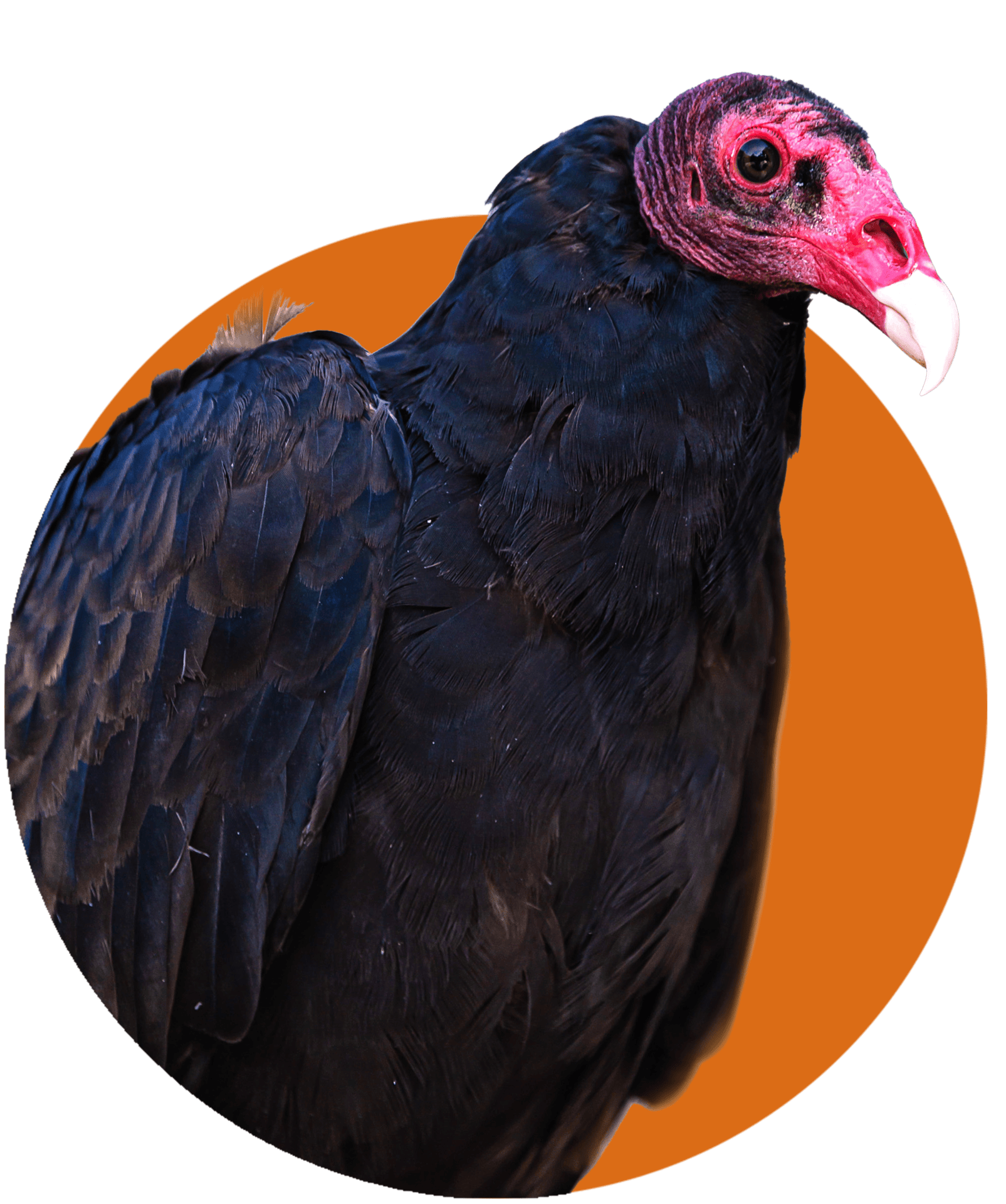
There are three species of vulture in the United States: the black vulture, the California condor, and the turkey vulture. Thanks to their bald heads and black feathers, vultures are rather easy to identify. It’s trickier identifying the different species! Turkey vultures’ have red heads, light or white colored beaks, and white under feathers.
Turkey vultures can be found from the southern border of Canada and as far south as Chile. Their geographical range is currently expanding. As scavengers, turkey vultures can be found anywhere carrion (dead or decaying animals) can be found, which is most often in or around human activity.
Vultures have many adaptations that allow them to successfully and safely scavenge. They are one of the only birds with a highly developed sense of smell, and their incredibly powerful stomach acid prevents them from carrying or catching diseases they may encounter. Turkey vultures, along with other scavenger species, play an important role in ecosystems by cleaning up carrion, leading to healthier and cleaner environments.
Gomez was donated to the Zoo in 2017 after being rehabilitated at the Montana Raptor Conservation Center in Bozeman, Montana for a wing injury he sustained in the wild. He was deemed non-releasable due to his lack of ability to fly long distances or even properly, but he can fly around his habitat from perch to perch. Today, you can often find Gomez closer to the front of his habitat, and on warm sunny days he may have his wings outstretched like he is sunbathing.
10:00am to 2:00pm

Guests are permitted to stay on grounds one hour after closing.
*Open every day except Thanksgiving, Christmas, and New Year's Day. Inclement weather and special events may also alter operational hours.